

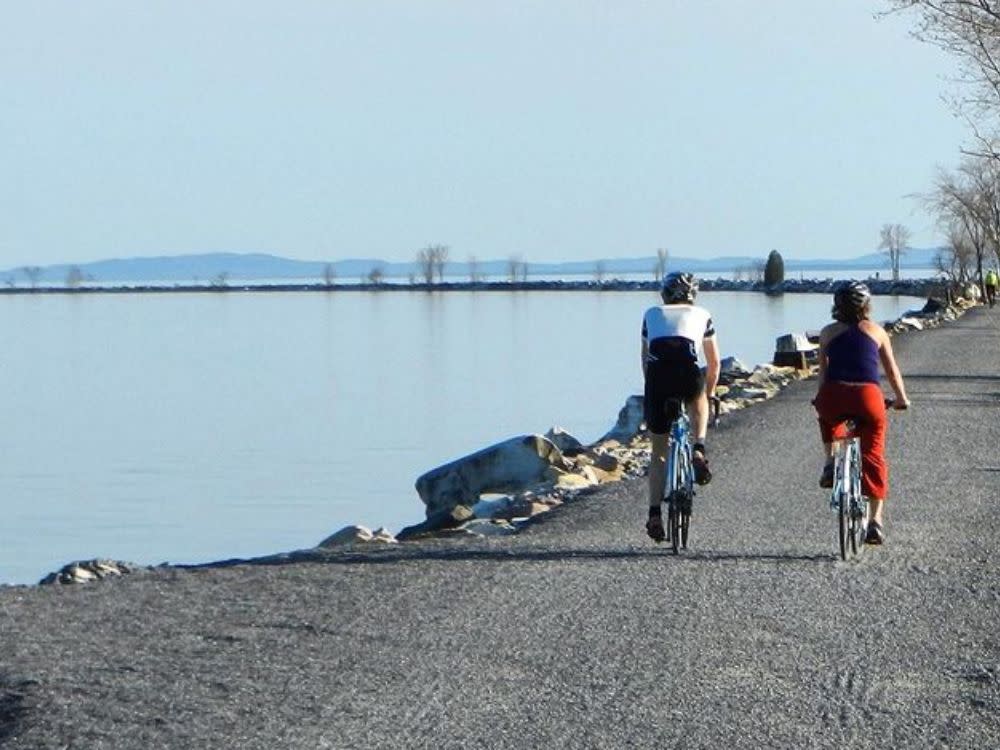
Trip Advisor ranks it Burlington's number one attraction. Locals just call it the bike path, or the Greenway, or the Island Line Trail, depending on which stretch you're standing on. City planners call it the Crown Jewel of the Queen City. All of them are talking about the same 8.9 mile stretch of pavement running along Lake Champlain, and almost none of them are thinking about the railroad it used to be.
The Railroad That Came First
That railroad showed up first. Before trains, Burlington's connection to the outside world was a steamboat on Lake Champlain, which worked well enough except for the half of the year the lake froze solid. The Rutland Railroad reached the city in 1849, beating a rival line by a matter of timing, and Burlington stopped being landlocked for good. Within a few decades the city had grown into the third largest lumber port in North America, behind only Chicago and Albany, with waterfront lumberyards so dense that the gaps between stacked boards had their own street names.
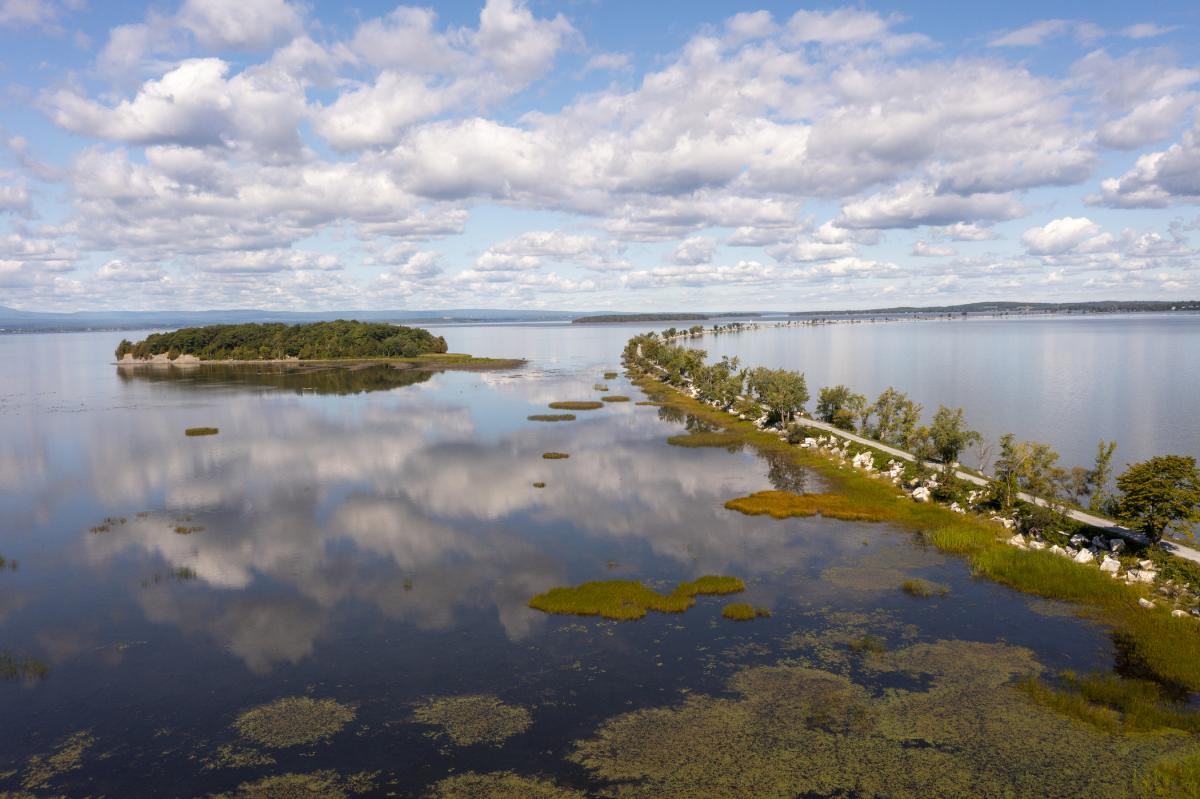
In 1899, the same railroad tried something with no real precedent in the region. Crews, many of them Italian immigrants, hauled in Vermont marble and limestone to build a causeway straight across the lake, from Colchester to South Hero, then kept the line going north through the islands and into New York. The whole stretch ran forty seven miles, much of it laid over open water, and took about a year to finish. People still cross it today, just not by train.
The Rutland Railroad didn't outlast the century. The last train ran in 1961, and the corridor sat quiet for the better part of two decades.
The Fight to Build It
What happened next started as a fight over condo towers. In 1980, Tom Hudspeth, an environmental professor at UVM, proposed turning the old railroad right-of-way in the New North End into a bike path. Around the same time, a young environmental attorney named Rick Sharp joined Hudspeth and a UVM classmate named Howard Dean to form the Citizens Waterfront Group, opposing a plan to build two eighteen story condominium towers on the downtown waterfront just north of College Street. It was Dean's first real entry into public life. It would not be his last.
The group's alternative won out. Burlington voters approved the bike path by a 75 percent margin in a 1981 ballot vote, and funding was secured by 1984. But the project also triggered a lawsuit over who actually owned the abandoned rail corridor, since railroads typically held only an easement, not the land itself. That case worked its way to the U.S. Supreme Court and became one of the defining rulings on rail trail conversions nationwide, preserving thousands of miles of former rail beds for public trails across the country. It also delayed Burlington's own path for years. The stretch from Oakledge Park to the Winooski River finally opened in 1990.
Getting Across the River
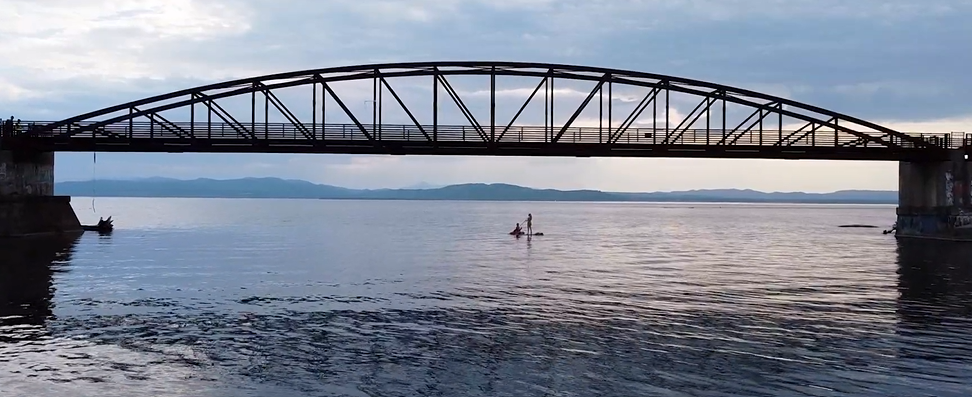
Getting across the river was its own decade long argument. The original railroad bridge over the Winooski had been torn down in the 1970s, and a 1992 ballot proposal to build a bike bridge in Colchester failed after a vocal group of local residents opposed routing the path through their neighborhood to reach the causeway. Advocates didn't stop there. After clearing decades of underbrush off the old causeway and finding a usable cinder bed underneath, they proposed a bike ferry instead. Governor Dean, at the causeway's 1994 dedication as a bike trail, agreed to fund one. That ferry ran for three years and carried more than 40,000 people across the river before a permanent bridge, funded through Dean's later push at the state level, finally opened in 2004, connecting downtown Burlington to the causeway in one continuous route. The corridor was renamed the Island Line Trail and inducted into the Rails to Trails Hall of Fame in 2010.
Local Motion and the Island Line Today
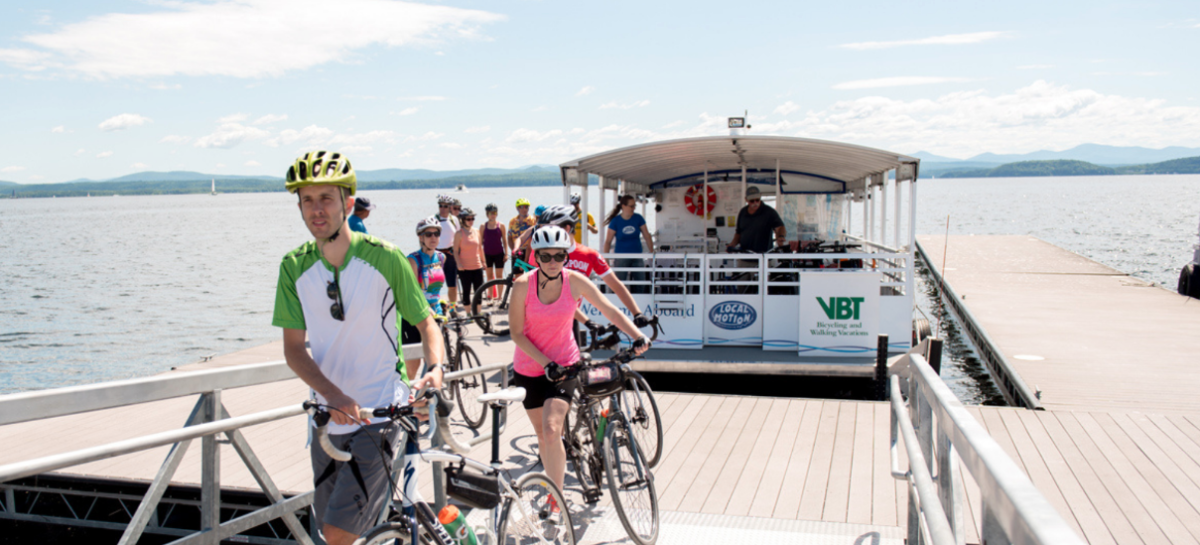
The advocates who ran that original river ferry, led by Brian Costello and Chapin Spencer, went on to found Local Motion, now one of the most effective walk and bike advocacy groups in the country. Local Motion still runs a seasonal bike ferry today, this one across the gap in the causeway known as the Cut, carrying riders and pedestrians the rest of the way out toward the Champlain Islands without a car in sight.
The railroad that built this waterfront is gone. The fight to replace it with something the whole city could use took almost as long to win. You're still riding on top of both.

