Did you know? Burlington is a participating destination in the lighthouse association of America? Get the passport and stamp!
Today Burlington is a participating destination in the U.S. Lighthouse Society's Lighthouse Passport Program. (one of only 2 in the state of Vermont) If the passport program is new to you, the idea is simple and we think it's pretty charming.
You carry a little blue booklet that looks a lot like a real passport, and every time you visit a participating lighthouse you get it stamped. A small donation of a couple dollars per stamp goes toward lighthouse preservation, so your growing collection is helping keep these towers standing. People fill whole passports over the years, one visit at a time, and now Burlington is one of the stops.
For the breakwater lights our team at the Lake Champlain chamber of Commerce holds the stamp so you can shoot them an email to receive the stamp!
Reach out to: Keith@vermont.org
Why the lights actually matter:
It is easy to forget now, but there was a time when Lake Champlain was a working highway. Through the 1800s the lake carried a steady stream of canal boats, steamers, and barges hauling lumber, iron ore, stone, and goods between Canada and the Hudson River.
Burlington was a serious lumber port. All of that traffic needed to move at night and in bad weather, and the reefs and points that make the lake beautiful also made it dangerous.
That is what the Vermont lighthouses were for. The oldest of them went up in the 1820s and 1830s, including Juniper Island Light offshore from Burlington and Windmill Point Light up near the border.
The Burlington Breakwater Lights followed in 1857, and Colchester Reef Light in 1871, built to mark the dangerous stretch of reef that had been catching boats for years. For decades these were essential, the difference between a safe passage and a wreck.
As railroads and then trucks took over the freight that used to move by water, the lake traffic faded and the lights slowly lost their working purpose. Most were automated or shut off in the twentieth century. What is left is the towers themselves, and the history they mark.
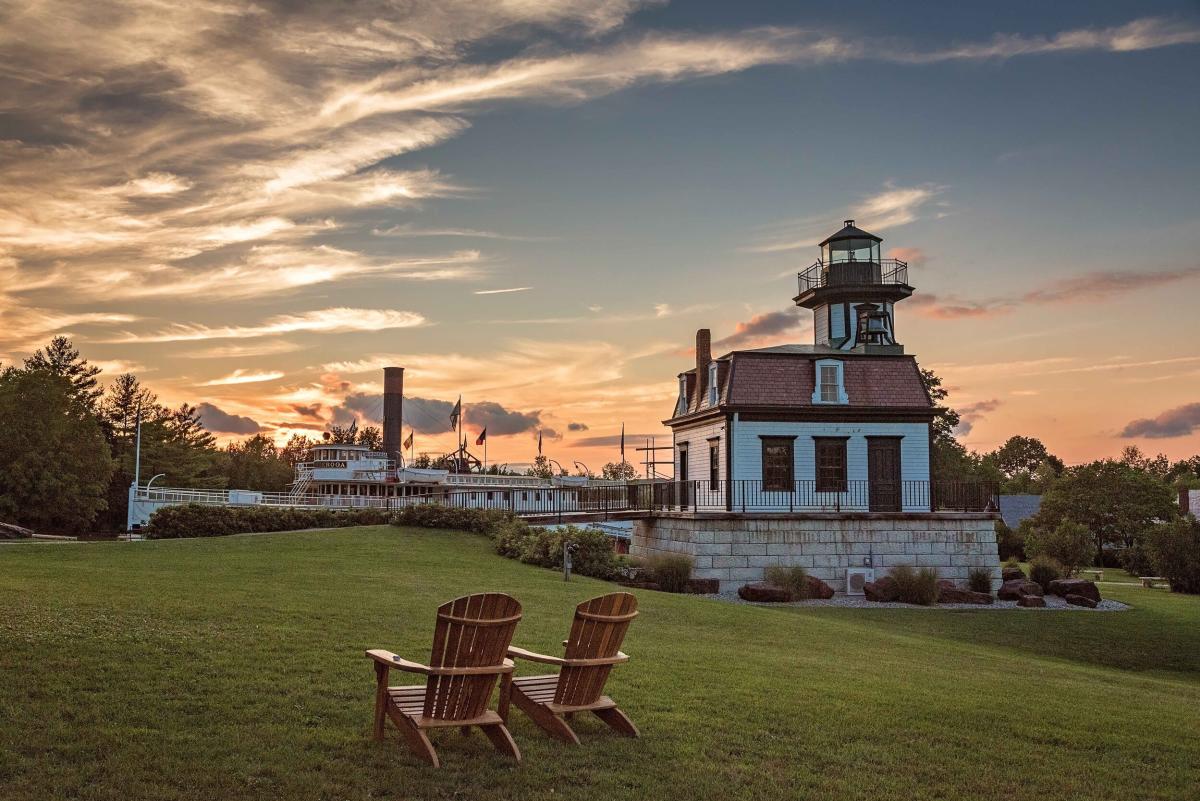
The one that moved to a museum
There is a second Burlington-area lighthouse with an amazing story. Colchester Reef Light was built in 1871 off Colchester Point to warn boats away from a dangerous stretch of reef. It was designed by a UVM engineering graduate and cost around $24,500 to build, which made it the most expensive lighthouse ever put up on Lake Champlain.
It stood out on the reef for decades until 1956, when the entire structure was moved to the Shelburne Museum. Today, you can walk right up to it and even go inside to collect Vermont's second official lighthouse passport stamp, a rare experience for a former working-era lighthouse.